
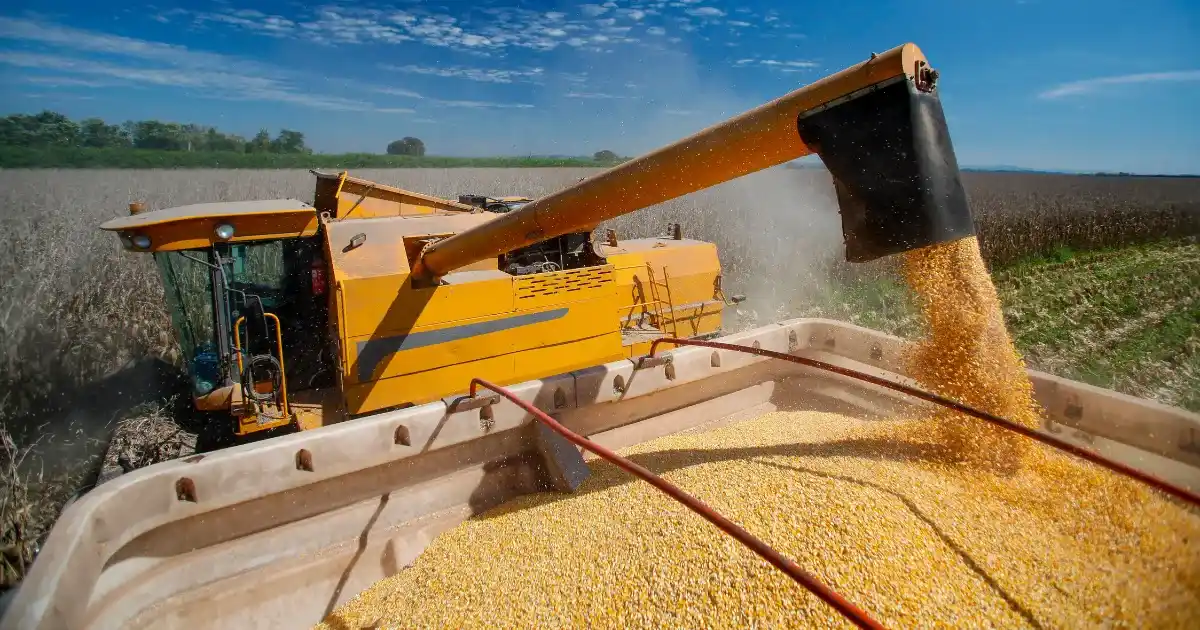

As autumn approaches, the U.S. corn belt is buzzing with anticipation. The 2025 corn season is shaping up to be one of the most closely watched in recent memory. Based on the latest forecasts from USDA, NASS, and independent ag economists, this year’s harvest could set new records—but not without facing mounting headwinds.
Record-Setting Projections
The USDA’s September 2025 Corn Production Report forecasts a yield of 186.7 bushels per acre, down slightly from the August estimate but up about 4.1 % over last year. Total U.S. corn production is pegged at a historic 16.8 billion bushels, which would outpace 2024 by more than 13 %.
To reach that volume, harvested acreage is also expected to climb. NASS now estimates 90.0 million acres of corn will be harvested, up significantly from prior years. Planted acreage is even more ambitious: 98.7 million acres, the highest such number since 1936.
Across the Corn Belt states—from Iowa to Illinois, Indiana to Nebraska—many are forecast to hit state-record yields, according to NASS.
In earlier USDA projections (May), average farm price expectations for 2025/26 stood near $4.20 per bushel, slightly lower than preceding years.
These numbers, taken together, signal both optimism and caution: optimism in the possibility of beating previous harvest records, and caution because high supply could weigh heavily on corn market prices.
What’s Driving the Expansion?
Acreage Shift from Soybeans
One of the key drivers behind this record-breaking outlook is the continuing shift of farmland from soybeans to corn. As global soybean demand softens and input costs rise, many farmers opted to plant more corn. FSA (Farm Service Agency) acreage data suggest corn planted area estimates may yet be revised upward.
Favorable Growing Conditions (So Far)
Through late summer, much of the Corn Belt enjoyed relatively favorable weather—adequate rainfall, warm growing degree days, and fewer extreme heat spells in some regions. According to USDA crop progress reports from May, 68 % of the corn crop was rated in “good to excellent” condition.
Also, earlier in the season, 87 % of the crop was planted and 67 % had emerged, both figures ahead of five-year averages.
Technological and Agronomic Gains
Modern hybrids, better soil fertility management, more precise nitrogen applications, and improved pest/disease control all contribute to incremental yield gains year over year. Additionally, variability in yields is narrowing: modeled projections suggest that extreme lows or highs become less likely as agronomic practices standardize.
The Risks That Could Tip the Scales
Even with these promising projections, multiple risks threaten to disrupt the optimistic scenario.
Weather Extremes & Climate Volatility
Late-season heat stress, drought, or excessive rainfall events can severely damage kernels during grain fill. Pollination is particularly sensitive to extremes. With climate change intensifying such swings, the window for error narrows.
Disease & Pest Pressures
Hot, humid conditions this summer in parts of Illinois and surrounding states have already exacerbated fungal disease occurrence (gray leaf spot, southern rust, blights). These stress the crop’s physiology, reduce photosynthetic area, and can trigger stalk lodging or aborted ears.
Input Costs & Supply Chain Struggles
Fertilizer, seed, fuel, and crop protection inputs remain expensive. Rising costs squeeze margins, and some farmers may under-apply protective treatments (e.g. fungicides) to save expense—potentially increasing disease losses.
Weak Market Prices & Oversupply Pressure
With record production comes the possibility of oversupply. A glut in the U.S. or global market could push corn prices downward. Even the USDA acknowledges that the season-average farm price is expected to stay stable or dip slightly.
Export & Trade Uncertainty
The U.S. competes with Brazil, Argentina, Ukraine for export markets. Any trade tariff shifts or logistical constraints could affect U.S. corn’s competitiveness abroad. Increased exports are baked into the forecasts, but they come with risk.
Storage & Handling Losses
When harvests are abundant, managing drying, grain quality, and logistical bottlenecks becomes critical. Poor storage or transport delays can lead to spoilage, mycotoxin development, or losses.
What This Means for Farmers, Buyers & Markets
For farmers, the 2025 season presents both opportunity and caution. Those able to manage input costs, monitor weather risks, and time marketing could benefit. But farms with tight margins may struggle if market prices slide.
Feed and livestock operations may welcome lower corn prices, as feed costs could drop. The added supply might ease pressure on the feed grain complex.
Exporters are banking on strong demand: USDA has raised its U.S. corn export forecast to nearly 3 billion bushels, a record. But to fulfill this, shipping logistics, port capacity, and global demand trends must hold steady.
On a market level, any imbalance—excess supply versus demand—could drive the stocks-to-use ratio higher, exerting downward pressure on prices. Some analysts expect lower per-bushel returns even if overall revenue increases.
A Cautiously Optimistic Outlook
The data for 2025 point to the possibility of one of the greatest corn harvests in U.S. history. Still, the margin for error is slim. Weather, disease, costs, and market dynamics could all sway the final outcome.
For those following the harvest, the key indicators to watch in the coming months will be: late-season weather patterns (especially heat and rainfall), disease incidence in major corn states, export bookings and rates, and the trajectory of input costs.
If realized, a record harvest could reshape the corn market, offering both chances and challenges for the U.S. agricultural sector in 2025.

